Quick start: Foraging

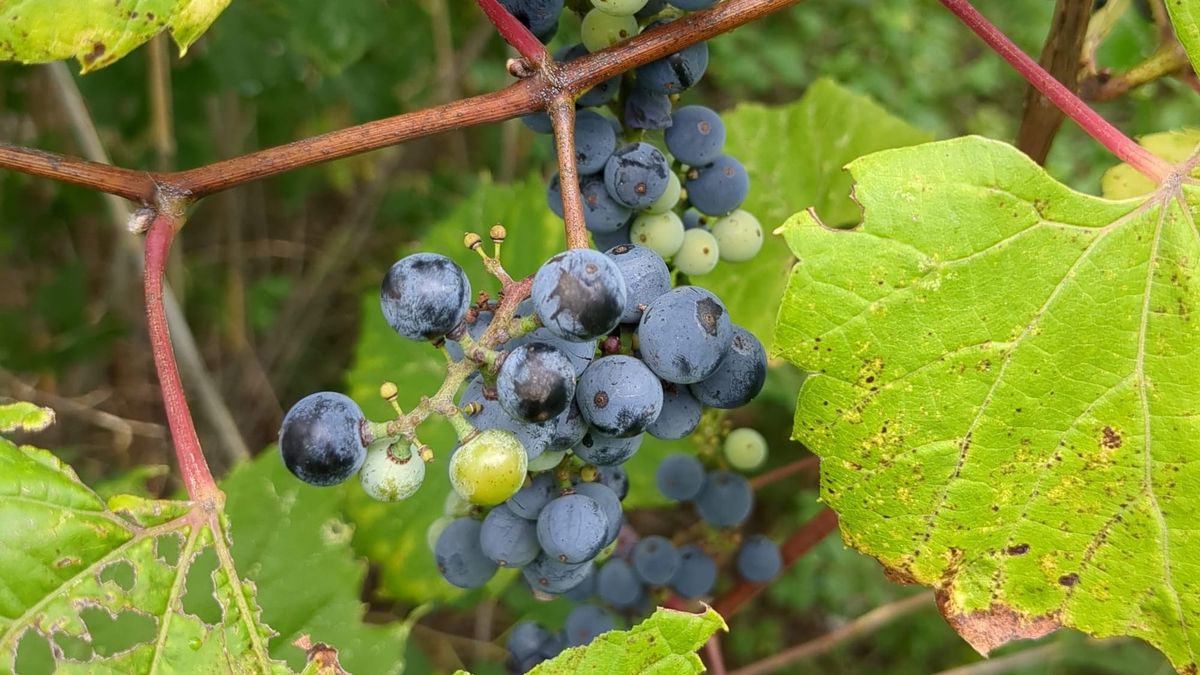
I have an interest in being able to wander around and eat things that others didn't know were food. This has lead to me being able to taste foods and flavors that you won't find in a grocery store. Berries that taste like plum-banana bread, leaves that taste like lemons, and fruit that tastes both slimy and delicious in a flavor I don't know what to compare it to. Interestingly, I've also found that there is a significant amount of edible food growing along right outside the office building where I work for my day job: carrots, grapes, raspberries, apples, mulberries, and more! What's amazing is hundreds of people walk past all these plants every day and have no idea what they're passing. I've even found raspberries growing along the lazy river of my favorite water park! So how do you get started learning to do something similar?
Step 1: Don't eat something if you don't know what it is.
Sam Thayer, possibly the United States' greatest expert on foraging, has a metric he likes to call "banana confidence". When you pick up a banana to eat, you don't look at it and think "is this a banana, the delicious tree fruit, or is this the deadly-false banana known to cause a painful death"? That would be ridiculous. A banana is a banana and you likely have 100% confidence that's what it is when you pick one up. This is the level of confidence you should strive for before eating something.
Sam also has a field book called "Field Guide to Wild Edible Plants" and honestly, if you just bought that book and left for the woods, it'd be all you needed to start identifying some edible plants. His book is the gold standard right now in edible field guides, and I don't know of any that have as much first-hand experience or as many plant species covered. If you wanted, you could just buy that and skip the rest of my blog post (this is not sponsored). Going forward, I'm going to assume you'll pick up a copy and try to avoid duplicating too much information.
Finally, here's my cheat sheet of the key highlights to foraging:
- Every plant is identifiable by it's unique traits. There are a lot of different parts of a plant to look at and consider when learning how to identify them, such as how many leaves it has, how those leaves are positioned, what color the leaves are, and etc. The field guide does a good job covering all of those, as well as the massive library of vocab behind such things. Note though, that there can be significant variation between species of plants. For example, just because something may be one color in an identification guide's photo, doesn't mean the sample you're looking at will be the same color (unless the color is a part of the identification, obviously). It is good to try finding multiple examples of the same plant to build "banana confidence". I'm not going to cover how to identify plants in this post, use Sam's field guide for that. For now, just know that there's a way to do it and that it's written down in a quick-reference book.
- Plants can be hard to identify during some parts of the year. Particularly right after winter, many plants can be difficult to identify because they're not yet showing their easiest identifying traits. You will have to learn some level of patience as you go through the year looking for plants to identify. If you really want to identify something right now, try looking up what plants are in bloom at your current time of year.
- Make sure you're allowed to forage where you're looking. Some places have laws against foraging in specific locations, counties, parks, and etc. Before going out, get a sense of where you are and are not allowed to gather.
- Be wary of pesticides. Many places, particularly in urban or cultivated environments, make use of pesticides and other chemicals for care taking. It is my official recommendation to avoid eating poison. Before munching on some lettuce you found growing in the sidewalk, stop for a second and ask yourself if this is safe (and legal).
- Be wary of new foods. Even if you know a given plant is edible and have successfully identified it, there's always a chance you have an allergy to a plant you've never tried before, so be careful.
- You don't need to go far. You would likely be amazed at how many plants are edible right around your home. For instance the street right outside my place has several forms of edible plants such as dandelion, plantain, lettuce, aronia berries, Canadian yew berries, and more! No, I don't live in the woods, I live downtown.
- Native plants don't need to be "planted". One of the questions I get most often when I point out an edible plant, such as an apple tree growing at work that no one notices, is "who do you think planted that there?". Fun fact: Native plants are native because this is their home. They grow wildly. Human's didn't invent the apple, and so sometimes things just grow, which seems to be much more common than they assume.
- Mushrooms not included. Mushrooms are an entirely different beast when it comes to identifying and eating. They are so different that I've so far avoided them entirely. My recommendation is to treat plants and mushroom foraging as two entirely separate hobbies. Plants are the much easier of the two.
That's it! That's all I have to say. With this information, you should be able to know what you want/need to learn more about and head out for your first foraging trip today!